Introduction
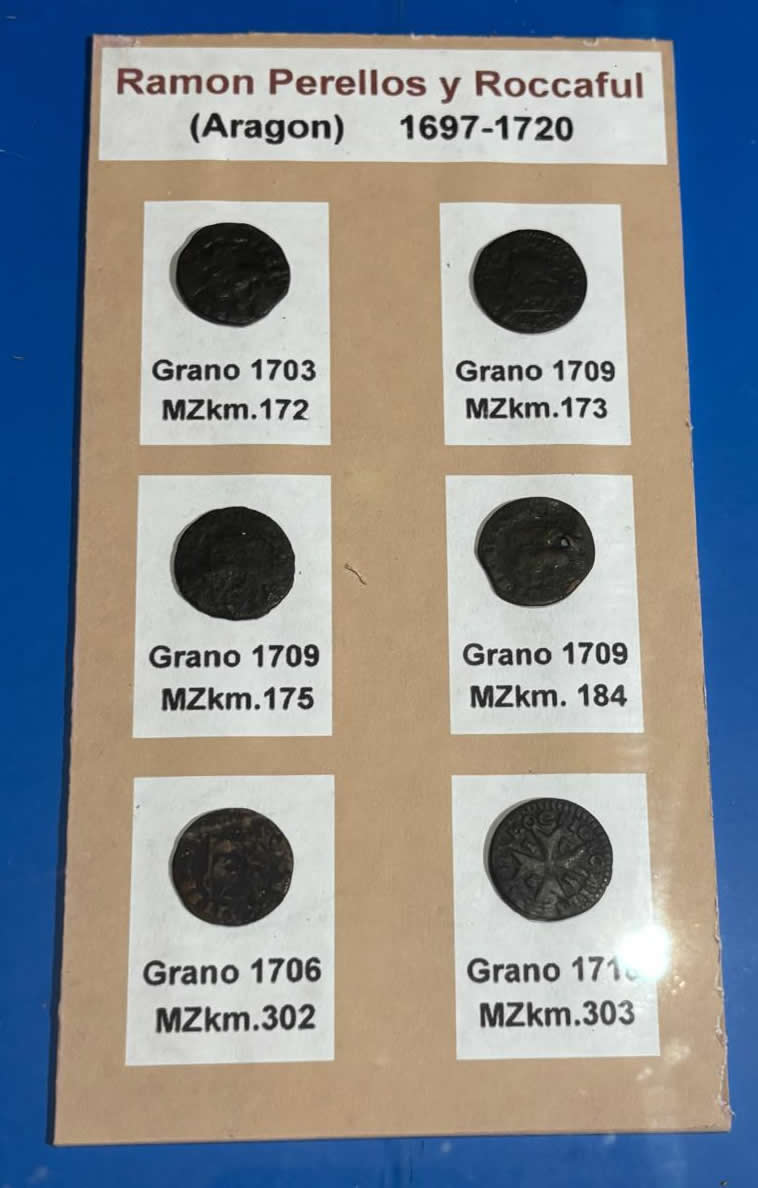
Grand Master Frà Don Ramon Perellos y Roccafull (1637–1720) stands among the most influential leaders of the Order of St John during its Maltese period. Serving as the 64th Grand Master from 1697 until his death in 1720, Perellos presided over a crucial era marked by military reform, artistic patronage, and architectural enrichment.
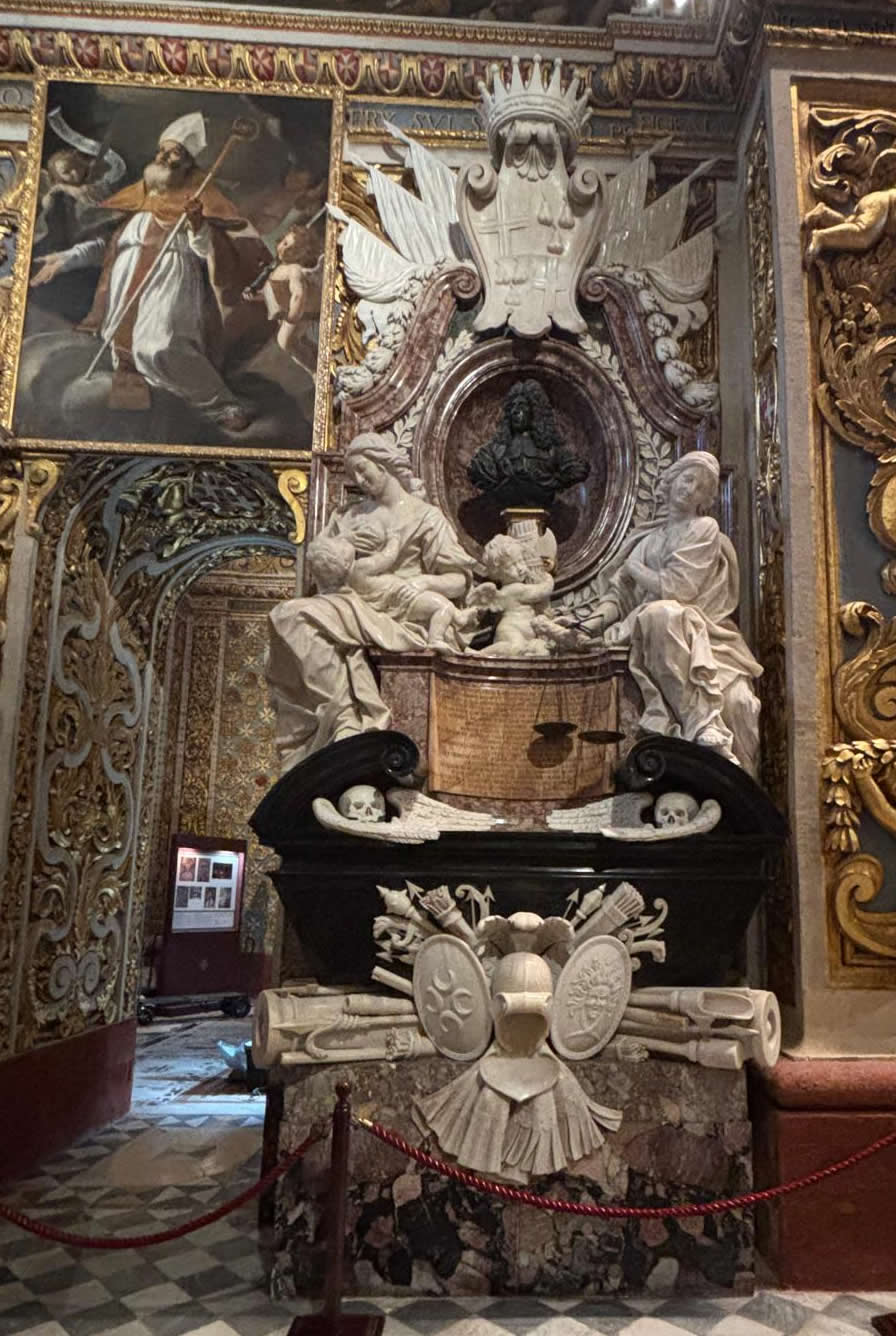
Today, his legacy is immortalised within St John’s Co-Cathedral in Valletta, where his elaborate funerary monument lies in the prestigious Chapel of the Langue of Aragon. His tomb forms part of one of the most remarkable ensembles of Baroque sepulchral art in Europe, reflecting both personal prestige and the collective identity of the Knights Hospitaller.
Early Life and Entry into the Order
Ramon Perellos y Roccafull was born in 1637 in the Crown of Aragon, in present-day Spain. He hailed from a noble Valencian family, which facilitated his early admission into the Order of St John.
He entered the Order at a young age and was attached to the Langue of Aragon, one of the most prominent divisions within the Order. By 1653, he had already relocated to Malta, where he began a long and distinguished career within the religious and military institution.
His steady rise through the ranks included administrative and naval responsibilities, demonstrating both leadership and strategic capability long before his election as Grand Master.
Election as Grand Master (1697)
On 7 February 1697, following the death of Grand Master Adrien de Wignacourt, Ramon Perellos was elected as the 64th Grand Master of the Order of St John.
His election came at a time when the Order was adapting to changing geopolitical realities in the Mediterranean, particularly the declining Ottoman threat and the evolving naval strategies of European powers.
Military and Naval Reforms
One of the defining features of Perellos’ rule was his commitment to strengthening Malta’s coastal defences. He oversaw the construction and reinforcement of batteries, redoubts, and entrenchments across the islands, ensuring continued protection against potential Ottoman incursions.
Additionally, he played a key role in developing the naval capabilities of the Order, including the establishment of a squadron that enhanced maritime security and operational readiness in the Mediterranean.
These initiatives contributed significantly to maintaining Malta’s strategic importance during the late 17th and early 18th centuries.
Patron of Art and Culture
Grand Master Perellos was also a notable patron of the arts, leaving a lasting cultural legacy within Malta’s most important religious monument, St John’s Co-Cathedral.
The Flemish Tapestries
Among his greatest contributions is the magnificent set of Flemish tapestries donated to the Co-Cathedral shortly after his election. These tapestries, commissioned in Brussels between 1698 and 1701, depict scenes from the Life of Christ and the Triumph of the Catholic Church.
The designs were based on works associated with the great Baroque master Peter Paul Rubens, and the complete set—comprising twenty-nine pieces—is considered one of the finest and largest of its kind in the world.
Arriving in Malta in 1702, these tapestries transformed the interior of the Co-Cathedral and remain a central highlight of its artistic collection today.
Architectural Contributions
Perellos also contributed to the architectural development of Malta, including the completion and enhancement of several ecclesiastical and institutional buildings. His patronage extended beyond Valletta, influencing projects such as the Church of St Lawrence in Birgu.
These works reinforced the Baroque identity of Malta, aligning the island’s artistic landscape with broader European trends of the period.
The Chapel of Aragon
The Chapel of the Langue of Aragon within St John’s Co-Cathedral is dedicated to Saint George and serves as the burial place for several prominent Grand Masters, including Ramon Perellos.
This chapel is one of the most richly decorated sections of the cathedral, featuring intricate marble work, elaborate sculptural elements, and significant paintings attributed to leading Baroque artists such as Mattia Preti.
The chapel reflects the prestige of the Aragonese knights, who played a vital role in the Order’s governance and military operations.
The Tomb of Grand Master Perellos
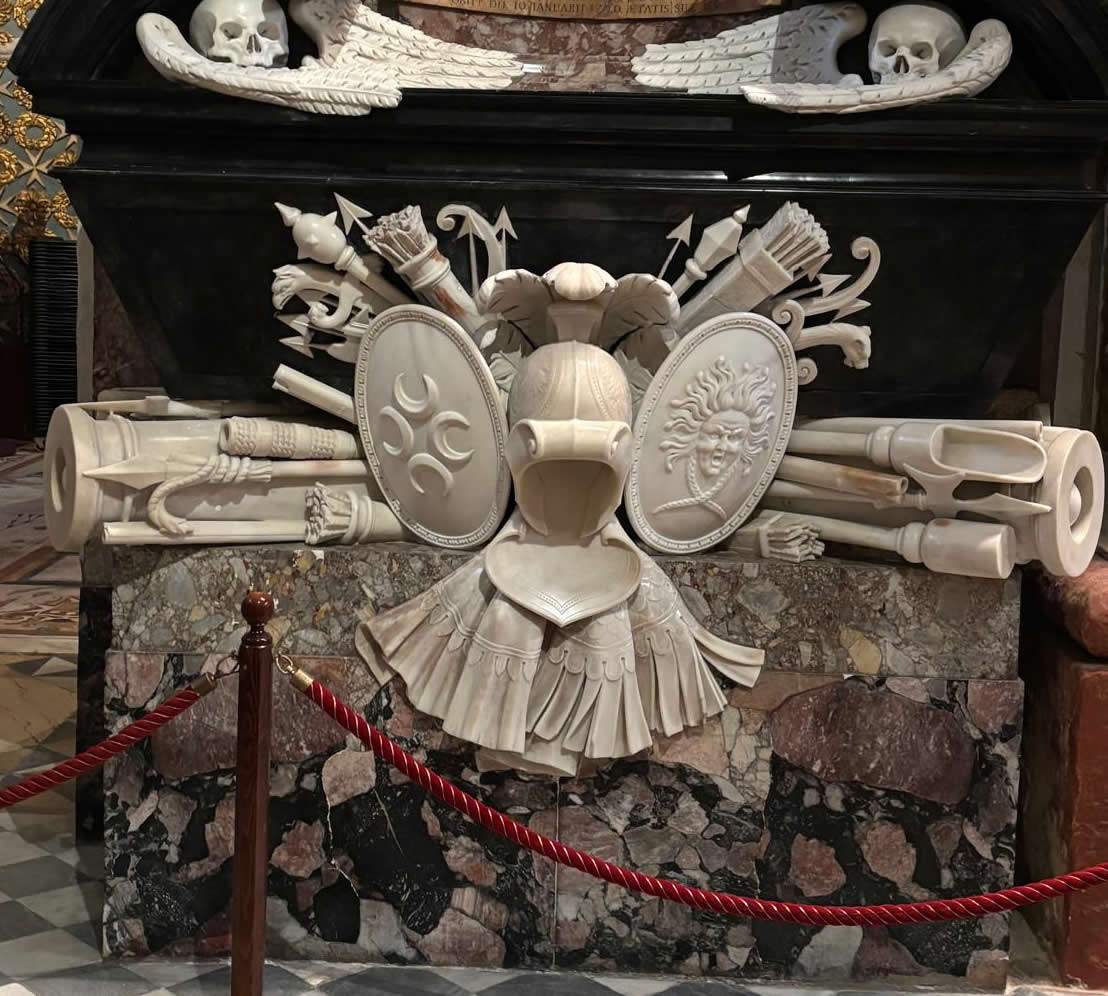
The funerary monument of Grand Master Ramon Perellos y Roccafull is one of the most striking features within the Chapel of Aragon. Executed in the Baroque style, the monument combines coloured marbles, sculptural allegories, and heraldic symbolism to commemorate his life and achievements.
His tomb is part of a broader ensemble of sepulchral monuments that collectively form a visual narrative of the Order’s leadership and legacy.
The monument underwent careful restoration as part of a major conservation project completed in 2011, ensuring its preservation for future generations.
Death and Burial
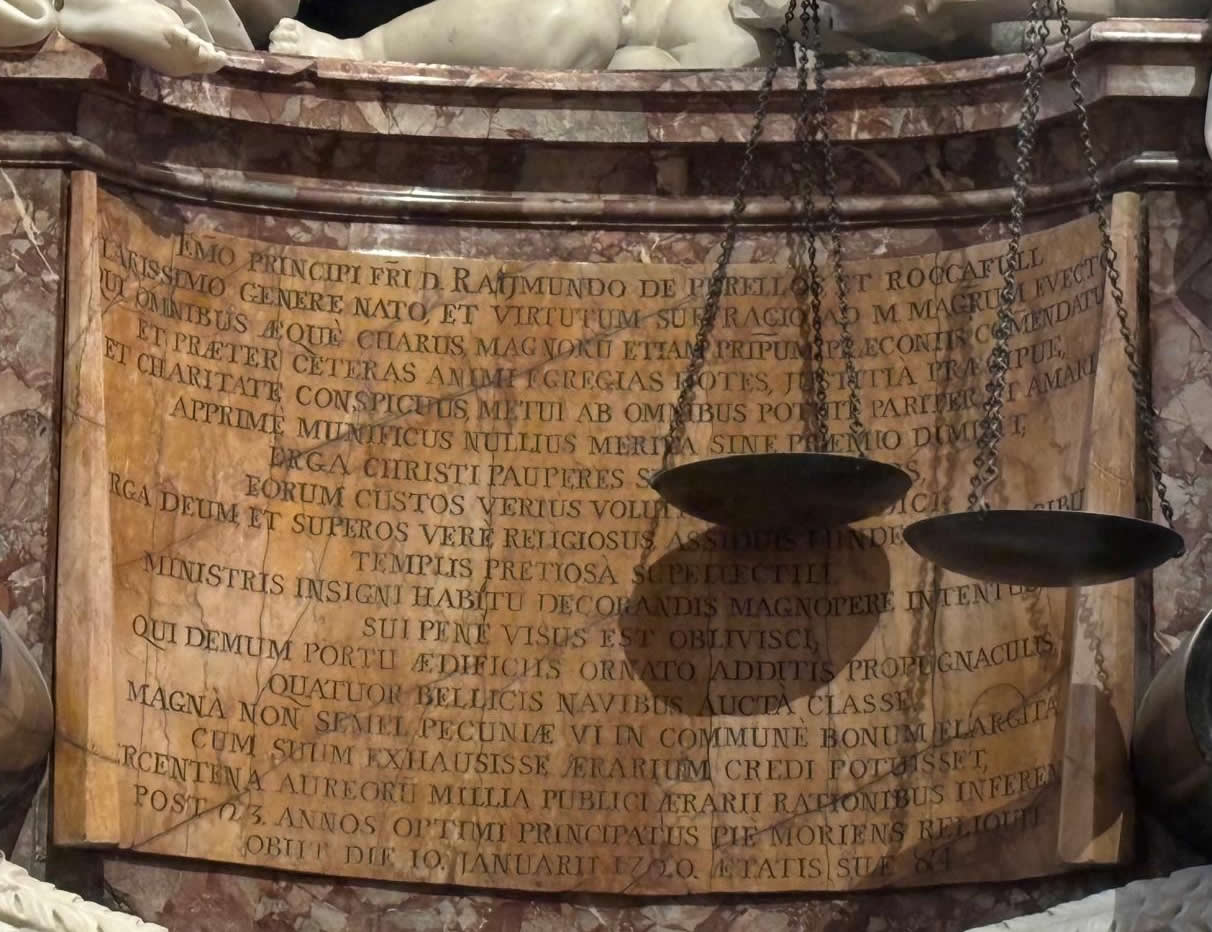
Grand Master Perellos died on 10 January 1720 in Malta at the age of 84, after more than two decades of leadership.
He was buried with full honours in the Chapel of Aragon, a testament to his status and contributions to the Order.
Legacy
Ramon Perellos y Roccafull left an enduring legacy that continues to shape Malta’s cultural and historical identity. His contributions to military defence, religious art, and architectural development ensured the continued prominence of the Order of St John during a transformative period.
Today, visitors to St John’s Co-Cathedral can witness his legacy firsthand through his tomb, the tapestries he commissioned, and the broader artistic environment he helped to cultivate.
Visiting the Tomb
- Location: Chapel of Aragon, St John’s Co-Cathedral, Valletta
- Coordinates: 35.901276, 14.518852
- Nearby: Oratory of St John, Caravaggio paintings, Cathedral Museum
Conclusion
The tomb of Grand Master Ramon Perellos y Roccafull stands as a powerful symbol of Malta’s Baroque heritage and the enduring influence of the Knights of St John. Through his leadership, patronage, and vision, Perellos helped shape one of the most remarkable periods in Maltese history.
His final resting place within the Chapel of Aragon continues to attract historians, art lovers, and visitors seeking to understand the rich legacy of the Order in Malta.
Frequently Asked Questions
Who was Ramon Perellos y Roccafull?
He was the 64th Grand Master of the Order of St John, serving from 1697 to 1720.
Where is he buried?
He is buried in the Chapel of Aragon inside St John’s Co-Cathedral in Valletta.
What is he most famous for?
He is best known for commissioning the famous Flemish tapestries and strengthening Malta’s fortifications.
When did he die?
He died on 10 January 1720 in Malta.
Can visitors see his tomb?
Yes, his tomb is accessible to visitors inside St John’s Co-Cathedral.